
Pulp and paper
Inline monitoring of bleaching bubbles and pulp-stock impurities.
→
SOPAT probes and Parsum analyzers for inline particle characterization and monitoring in industrial processes. Configuration starts with the medium, objective, and operating conditions.
Request an application assessment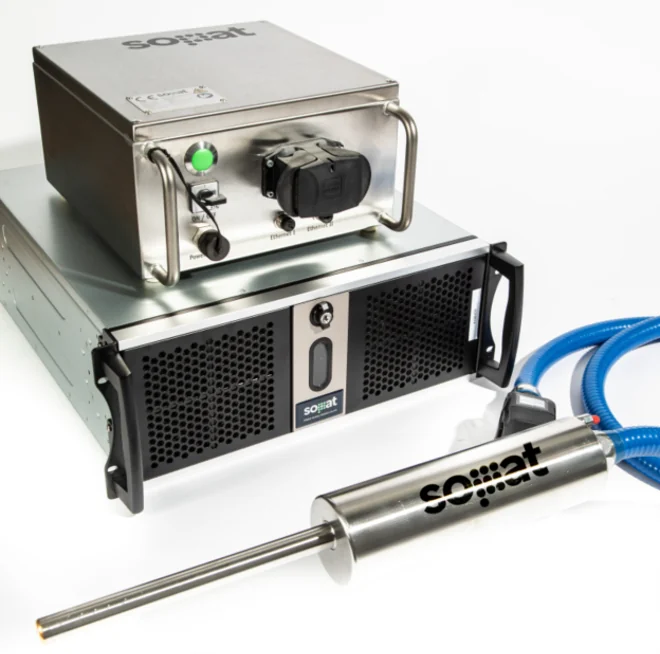
Inline monitoring of bleaching bubbles and pulp-stock impurities.
→
Monitor particles, solids, and emulsions without interrupting the process.
→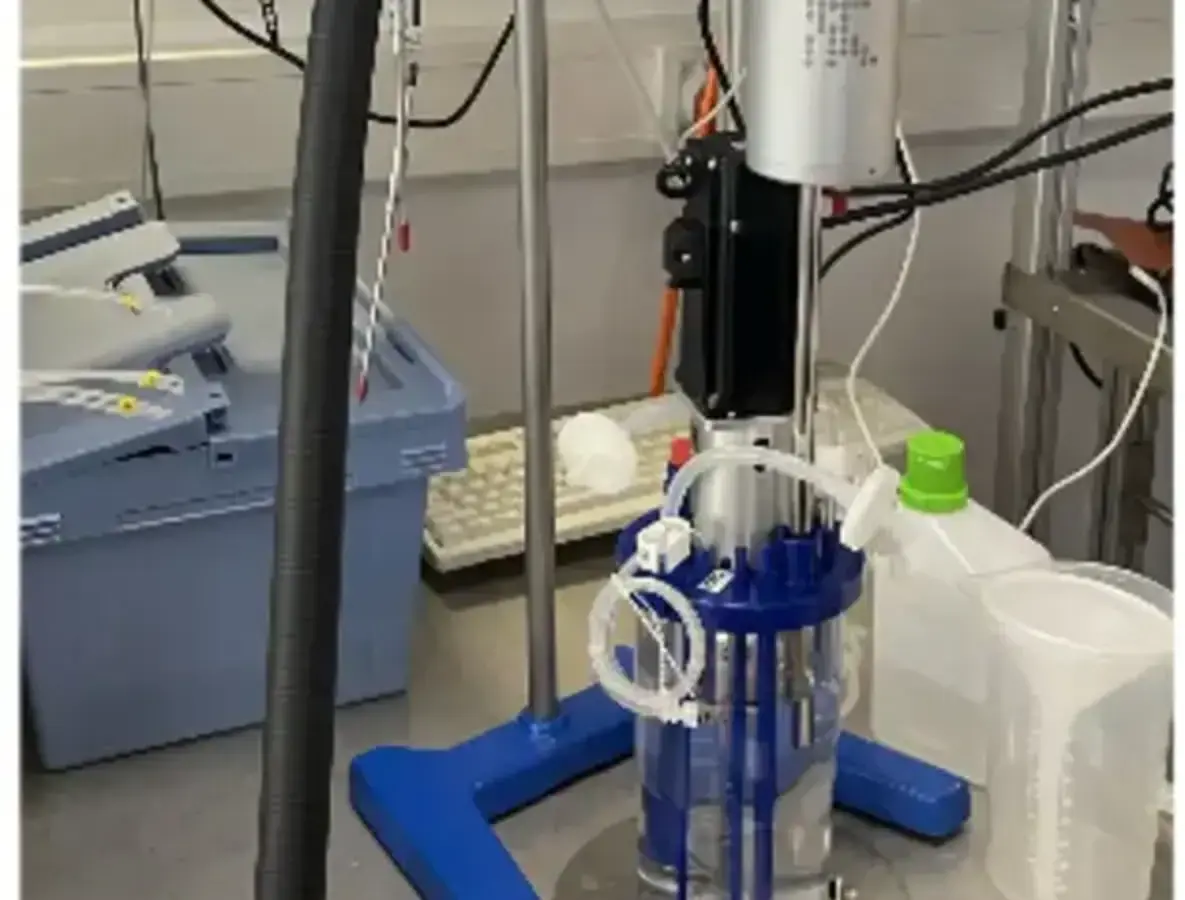
Cells, microorganisms, aggregates, and bubbles during cultivation.
→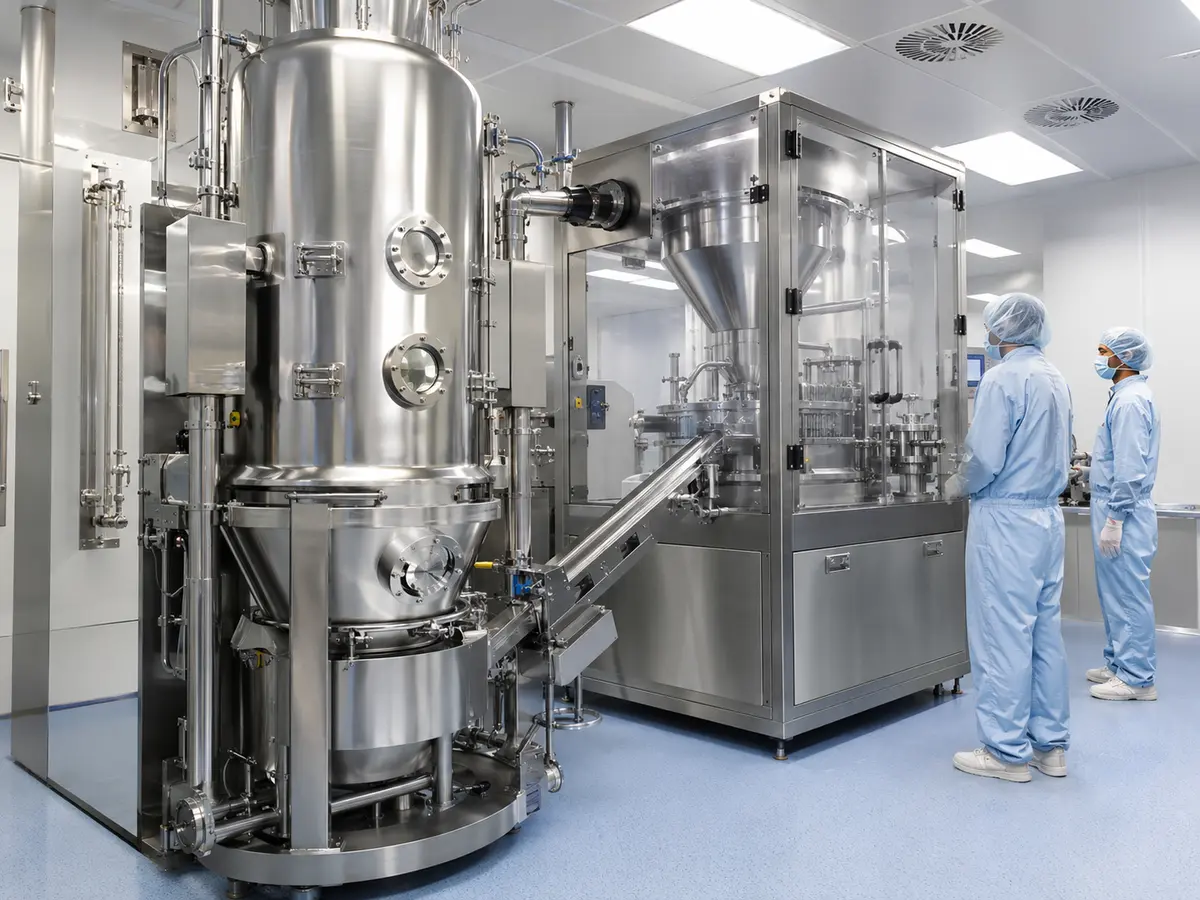
Real-time monitoring of crystallization, particles, and granulation.
→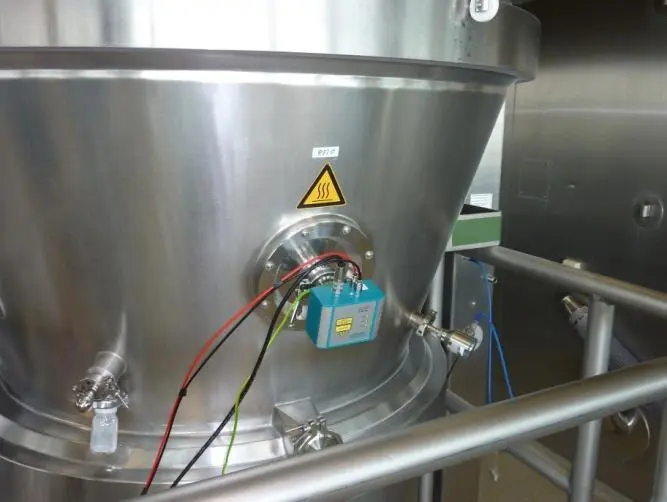
Track nucleation, growth, and endpoint in real time.
→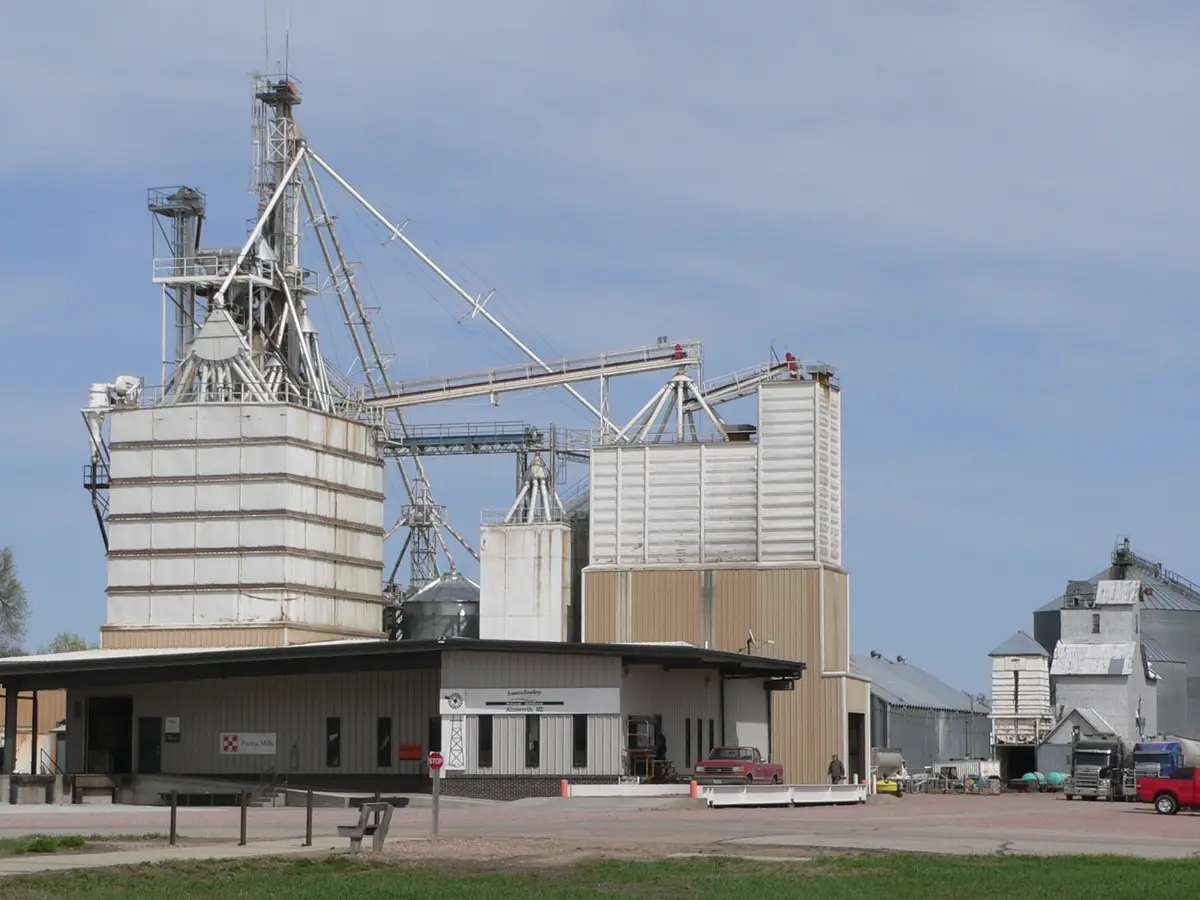
Continuous particle sizing from powder to pellet.
→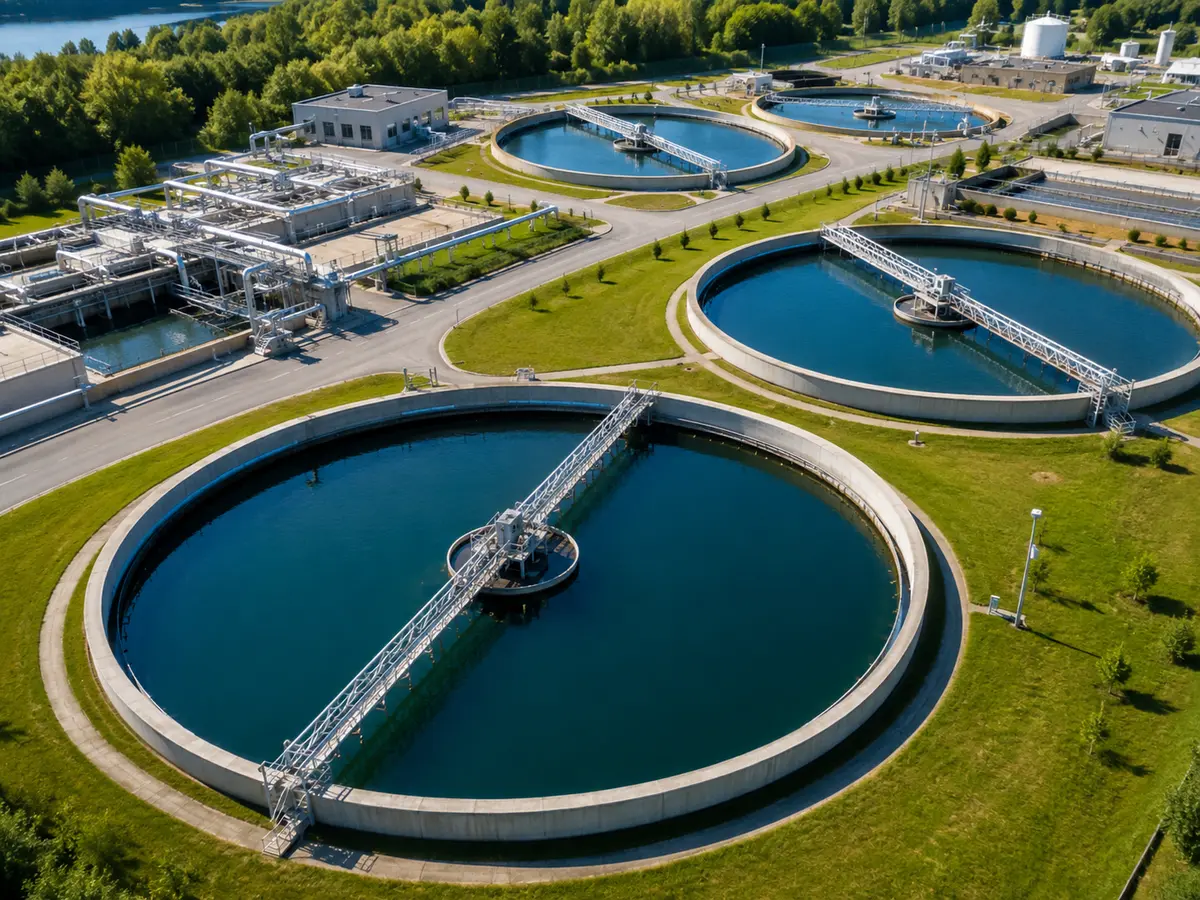
Follow flocs as they form, break, and reorganize.
→
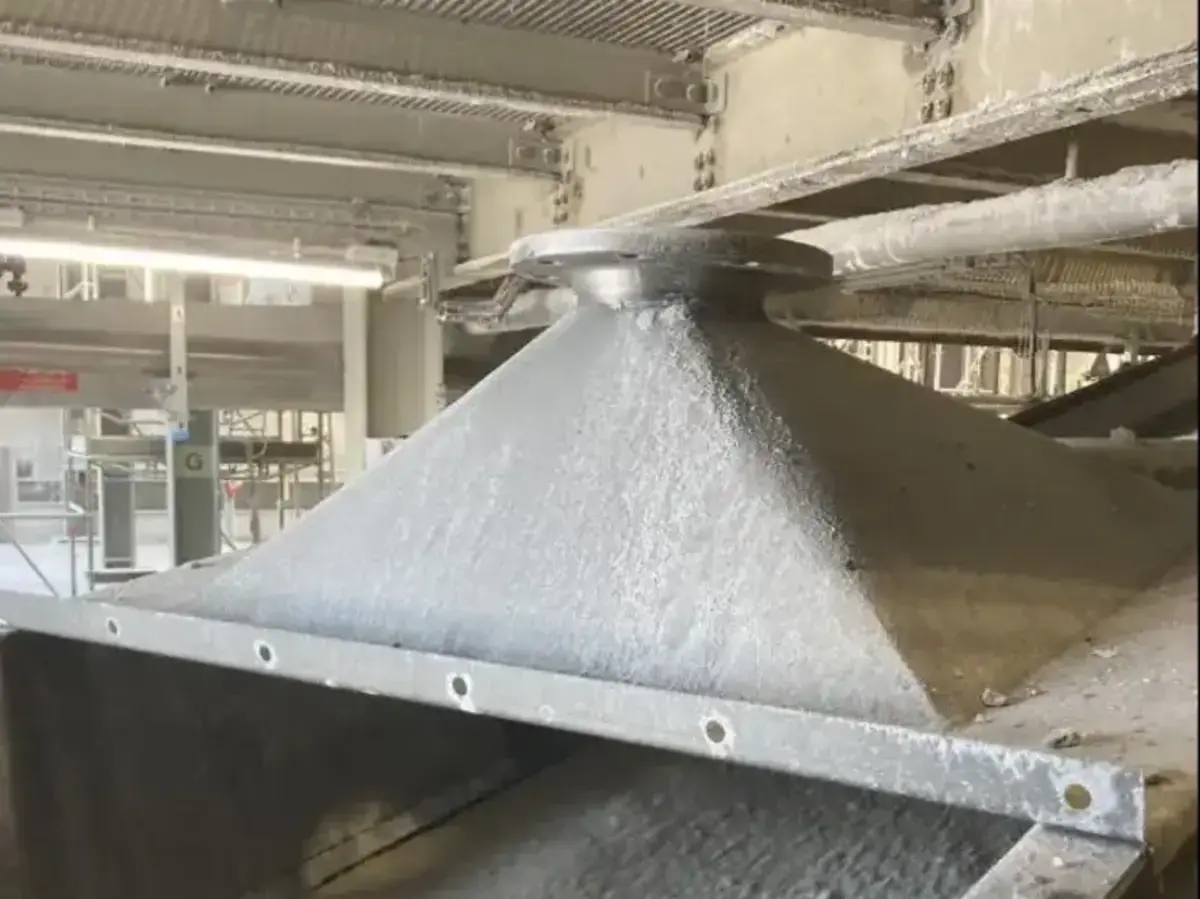
Track milling particle-size distribution in real time.
→
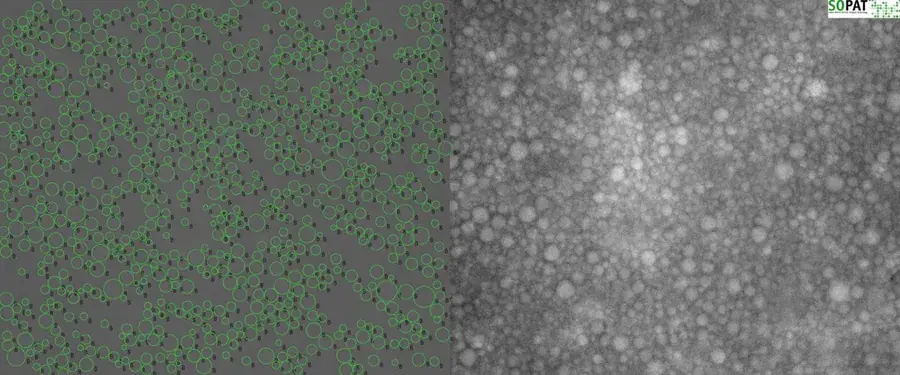
Monitor granulation from growth to final product.
→
Real-time droplet size, coalescence, and stability.
→
Track particles, concentration, and stability inline.
→
Track growth, fines, and endpoint in process.
→
Distributions and trends directly in the process line.
→We first evaluate the process medium, measurement objective, and operating conditions. We then select the appropriate instrument and configuration.
Particles, droplets, bubbles, crystals, cells, or combinations of dispersed phases.
Concentration, pressure, temperature, flow velocity, viscosity, and fouling tendency.
Process development, endpoint detection, quality control, or closed-loop process control.
Probe, illumination, accessory, process connection, and analysis algorithm.
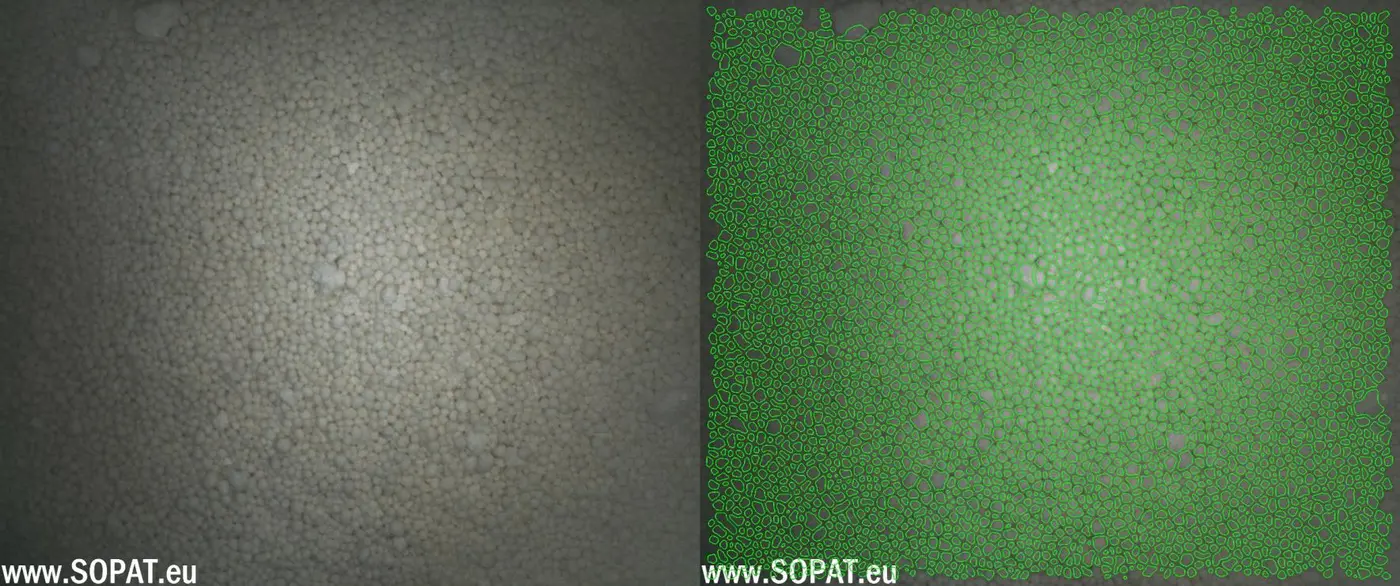
Real SOPAT application sequences show how inline process images are converted into quantitative data.
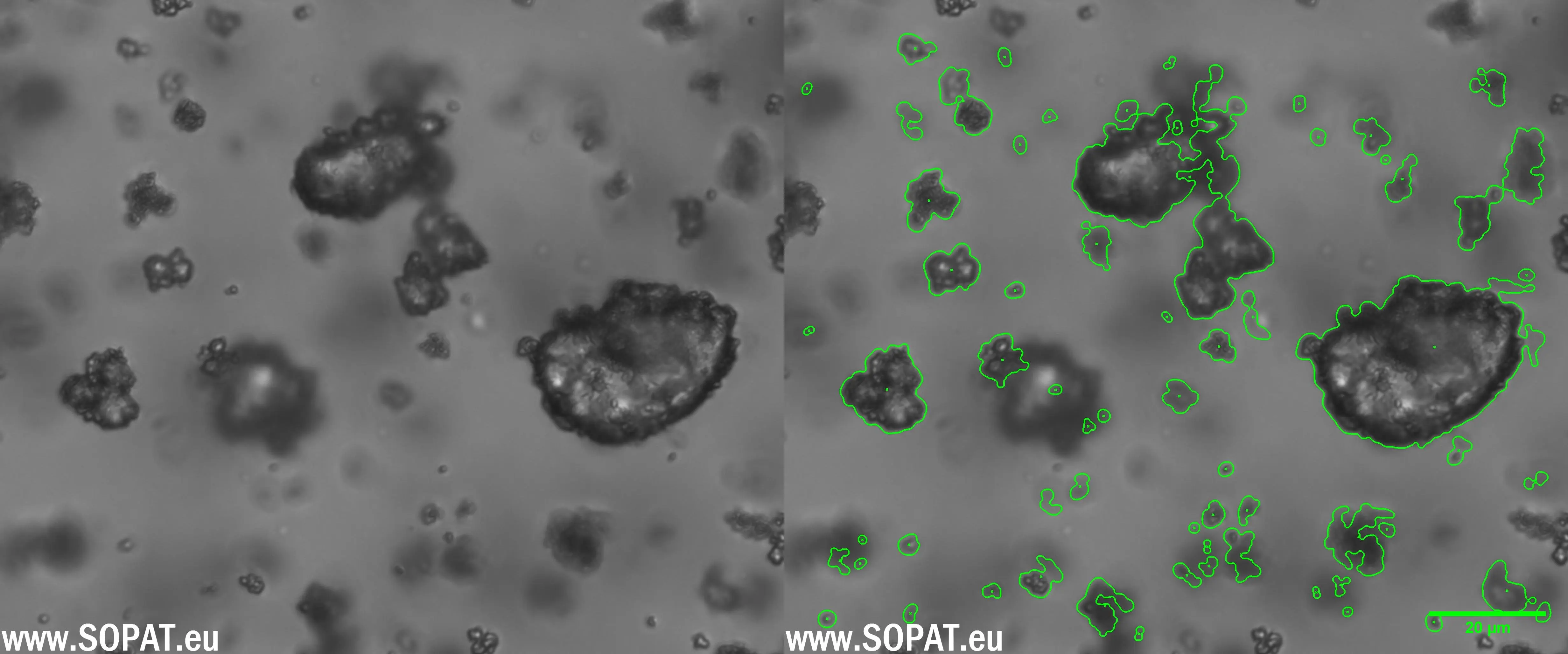
Automatically detected contours are used to calculate particle size, shape, and distributions.
Monitor cells, cell clusters, and morphological changes in bioprocesses.
Track bubble size, shape, population, and interfacial area throughout the process.
Visuals selected from SOPAT technical application materials.
Visit the official SOPAT website ↗Original SOPAT charts show how photo-optical analysis transforms process images into particle-size distributions, object counts, morphological information, and real-time trends.
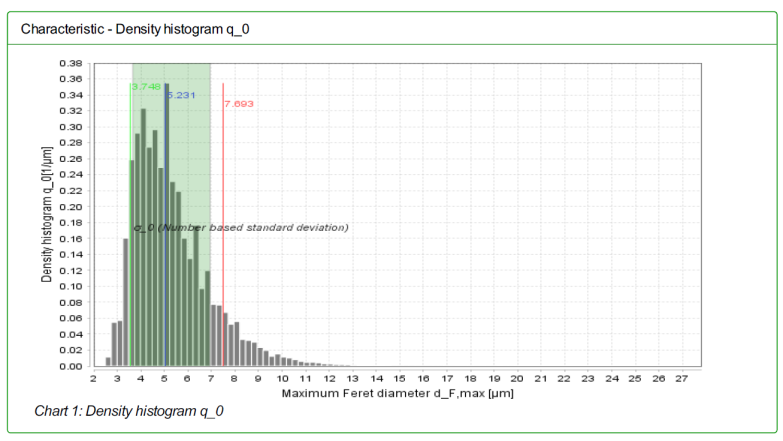
Original SOPAT histogram illustrating the particle-size distribution of a suspended particle population.
Source: official SOPAT corporate presentation.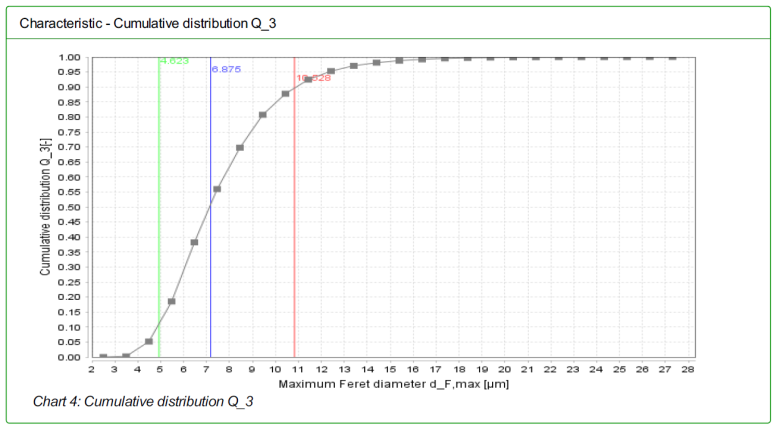
Original cumulative curve for interpreting population distribution and monitoring particle-size percentiles.
Source: official SOPAT corporate presentation.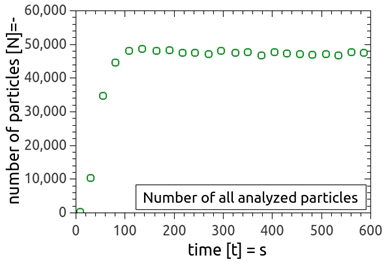
Continuous counting of analyzed particles throughout the process.
Source: official SOPAT corporate presentation.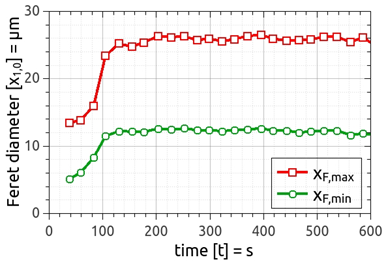
Minimum and maximum Feret diameters for size and shape analysis.
Source: official SOPAT corporate presentation.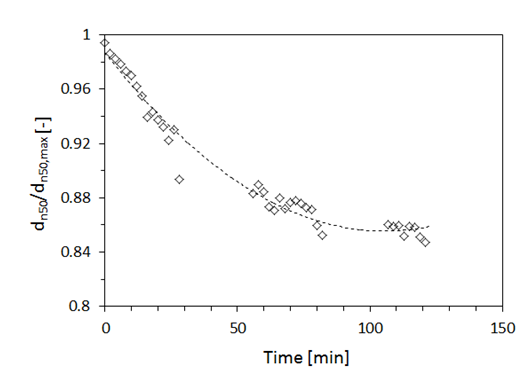
Monitoring median particle diameter and process stabilization.
Source: official SOPAT corporate presentation.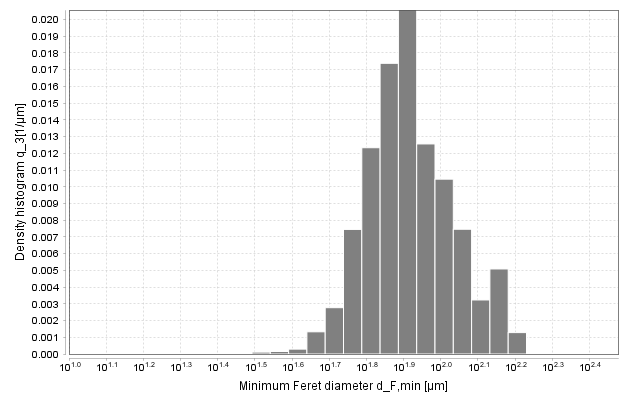
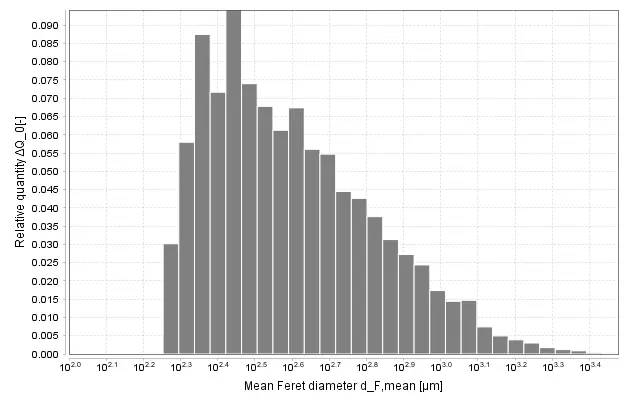
Feret-diameter distribution from a mineral-particle application.
Source: official SOPAT corporate presentation.Automated image analysis recognizes individual objects and, depending on the application, can distinguish particles, droplets, bubbles, crystals, and aggregates using optical and morphological features.
Histograms, cumulative distributions, percentiles, and shifts in the particle-size profile.
Number of detected objects and evolution of the analyzed population throughout the process.
Distinguish particles, droplets, bubbles, crystals, cells, or aggregates when the application allows.
Feret diameters, circularity, elongation, and other morphological characteristics.
Monitor growth, breakage, agglomeration, crystallization, and process stabilization.
Compare batches, evaluate operating adjustments, and support quality-control decisions.
All charts and images in this section were extracted from the official SOPAT corporate presentation. Available variables and class differentiation depend on instrument configuration, sample matrix, and application validation.
Laser probes installed directly in the process measure particle size, distribution, and velocity using extended spatial filtering technology (SFT), without sampling.
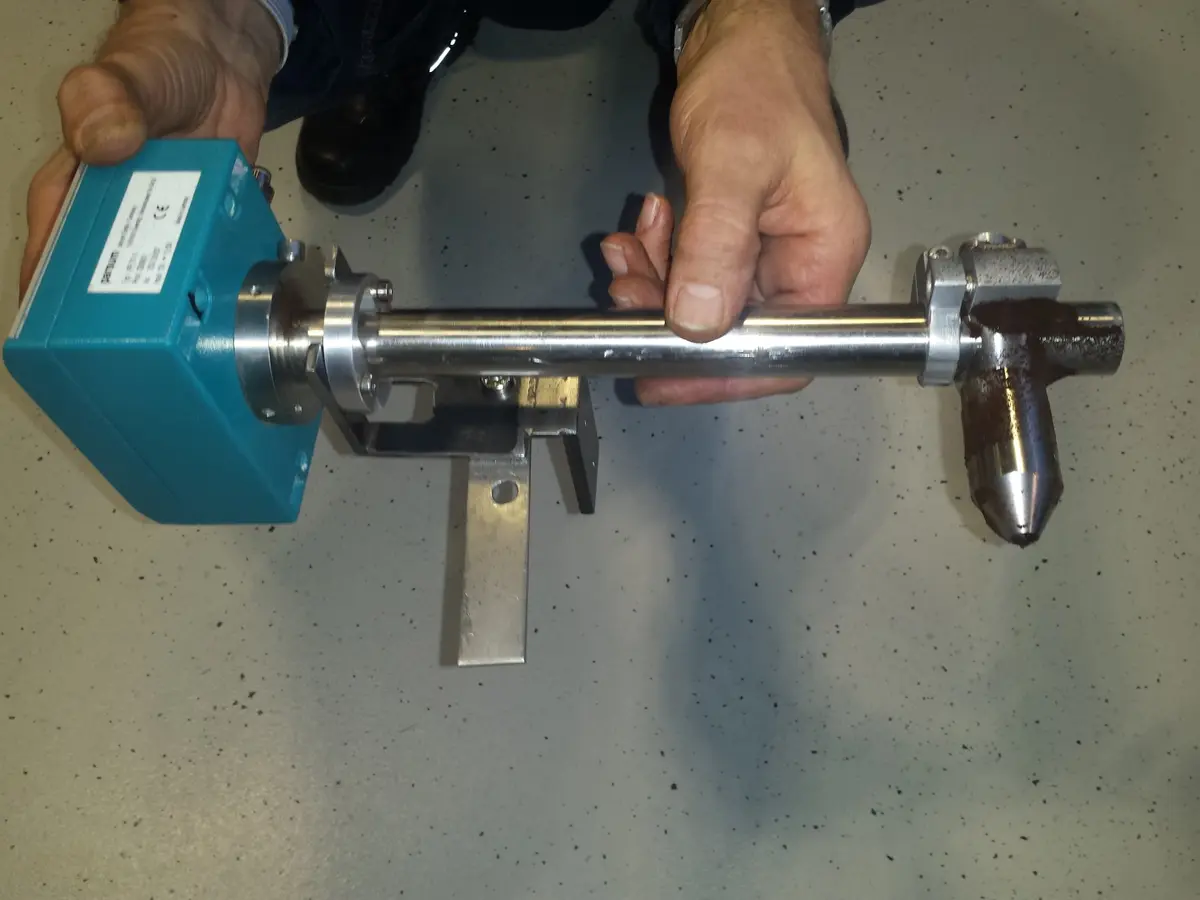
Compact probe for powders, granules, pellets, and sprays. Measures particles from 50 to 6,000 µm in pipelines, mills, screens, and fluidized beds.
Intrinsically safe configuration for potentially explosive process atmospheres, including zone 0/20 applications when the certified installation requirements are met.
Adaptable probe geometry for larger vessels and hard-to-reach installation points. Suitable for moist or sticky particles with appropriate dispersers and air cleaning.
Configuration for pharmaceutical and PAT applications, including granulation, pellet coating, and real-time monitoring in fluidized beds.
D24 and D12 dispersers locally dilute heavily loaded particle streams; cleaning cells keep optical windows clear; protective accessories support applications with abrasive materials.
High-resolution probe for observing biological systems, viscous emulsions, and concentrated suspensions directly in the medium.
View product →15–2,300 µmWide-field probe with flushing, cooling, and retractable installation options for industrial conditions.
View product →2–300 µmPhoto-optical endoscope for tracking fine particles and droplets at laboratory, pilot, and production scale.
View product →9–1,100 µmVersatile probe with an extended field of view for characterizing dispersed phases in liquid processes.
View product →30–7,700 µmLarge-field-of-view probe for millimeter-scale particles and demanding industrial applications.
View product →Compact industrial probe for continuously measuring moving solid particles.
View product →ATEX configurationIntrinsically safe configuration for powder and particle analysis in potentially explosive atmospheres, subject to the applicable certification.
View product →50–6,000 µmProbe for larger vessels and hard-to-access points, including sticky or moist streams with the appropriate configuration.
View product →Pharma · PATPharmaceutical-process configuration for tracking granule growth, endpoint, and pellet coating.
View product →Official manufacturer brochures, technical data sheets, and application documents available without registration.
Inline bubble monitoring in delignification and bleaching, plus detection and classification of pulp-stock impurities.
Download PDFTechnology, measurement principles, probes, and application overview.
Download PDFHigh resolution for biological samples, viscous emulsions, and concentrated suspensions.
Download PDFHigh-resolution inline endoscope for laboratory, pilot, and production scales.
Download PDFVersatile probe with an extended field of view for droplets, crystals, and particles.
Download PDFWide field of view with flushing, cooling, and retractable installation options.
Download PDFMacroscopic imaging for larger particles across different process scales.
Download PDFSpatial filtering technology, granulation, pellet coating, and coffee milling.
Download PDFCompact industrial probe for powders, granules, pellets, and flowing particles.
Download PDFIntrinsically safe configuration for potentially explosive process atmospheres.
Download PDFAdaptable probe length for larger process vessels and hard-to-access positions.
Download PDFConfiguration for pharmaceutical processes, granulation, and pellet coating.
Download PDFAdapt the process interface to heavily loaded, sticky, or abrasive particle streams.
Download PDFParticle-size monitoring during milling, soybean-meal processing, and pellet production.
Download PDFA selection of peer-reviewed technical papers in areas served by Niveus Tech, including references featured in SOPAT presentations.
Review of photo-optical analysis in multiphase systems.
Crystal size, shape, count and evolution in continuous crystallization.
In situ microscopy tracks morphology and budding index without sampling.
Real-time determination of single-cell morphology in bioprocesses.
Single-cell monitoring of lipid accumulation during cultivation.
Effect of broth components on droplet coalescence and product recovery.
Droplet distributions in gas–liquid–liquid systems, distinguishing droplets from bubbles.
Links open the DOI record, journal page, or official publication repository.